A new documentary on legendary Bermudian footballer Clyde Best takes a deep dive into his life, struggles and legacy.
For Bermudians of a certain age, the ability to entertain oneself with whatever the environment provides seems to be an innate trait. (Personally, I spent many happy hours as a child playing in the neighbourhood limestone quarry.) As a child, Clyde Best would kick a can down the road for hours on end. No, he wasn’t putting off dealing with a problem or avoiding confrontation. He was, thanks to his surroundings, amusing himself by literally kicking a can down the road.
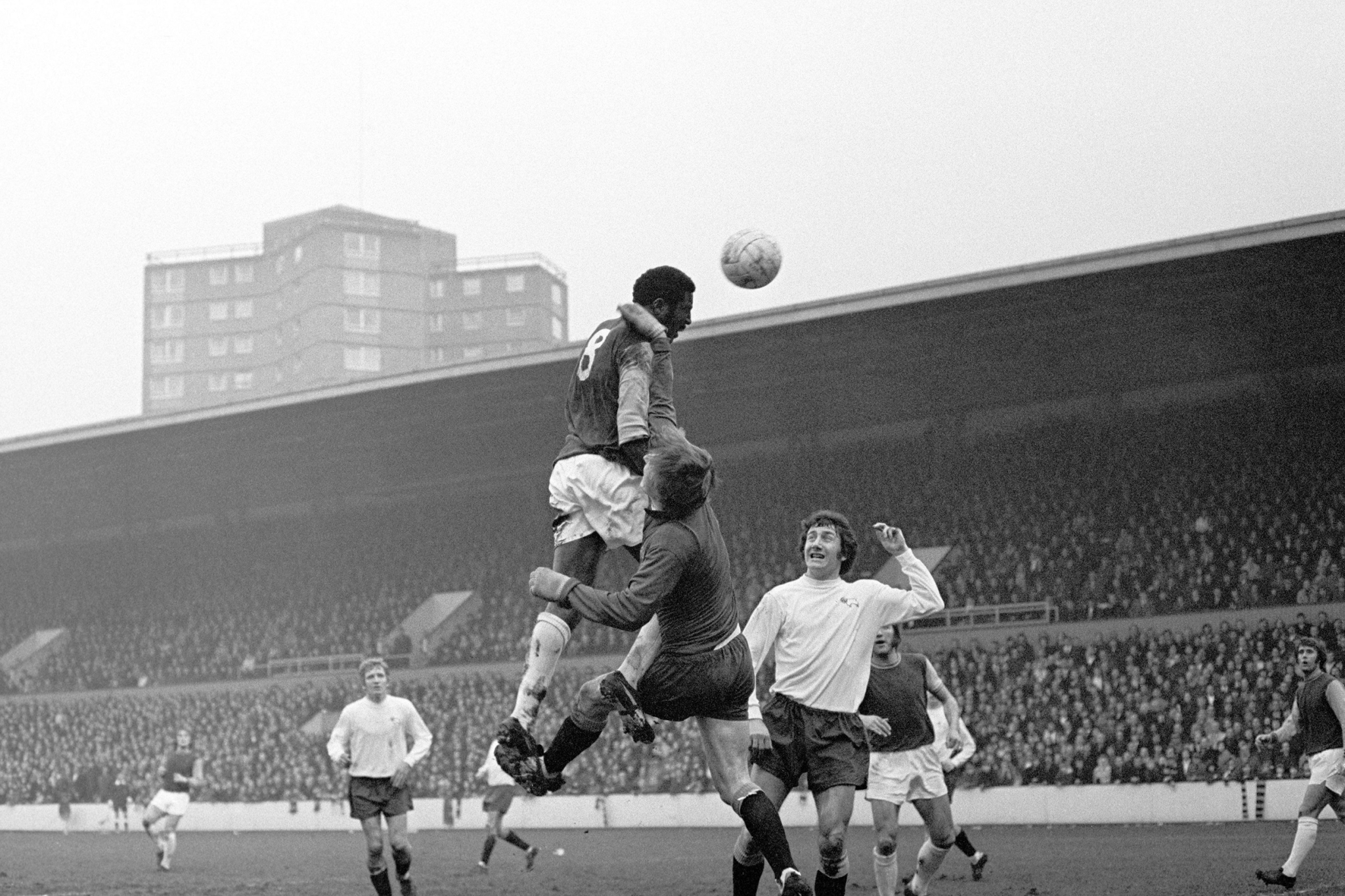
What the young Best couldn’t possibly have known at the time was that by controlling the can with the inner and outer edges of his feet, he was developing a physical skill that would lead him to sports greatness, eventually leaving Bermuda in 1968 to become one of the first Black footballers to play for England’s First Division West Ham United Football Club.

In the new documentary Transforming the Beautiful Game: The Clyde Best Story, director Dan Egan takes an in-depth look not only at the life and career of Best but also the footballer’s impact and what makes him, well, the best. What guided Egan to the making of the documentary was his longstanding relationship with the Best family, something that was established several decades ago while he was attending Bridgton Academy, playing football with Gerry Best, Clyde’s nephew. “Gerry and his other cousins approached me [a few years ago],” Egan tells The Bermudian. “They had the idea in their head [for the documentary] but they didn’t know anybody.” Luckily for the Best family, Egan already had experience in the sports documentary world with 2019’s Ski Bum: The Warren Miller Story. That, along with a decades-long relationship with the island (including working on the Sperry sponsorship deal for the 35th America’s Cup in Bermuda), enabled Egan to approach the Bermuda government for funding, which was secured in 2022.
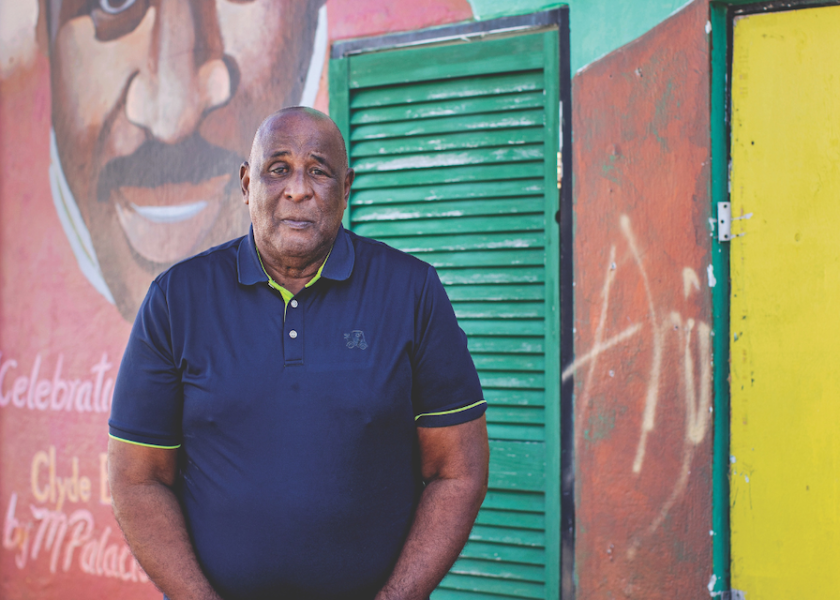
The subject, however, took a bit of convincing but having the family connection with the director certainly helped. “I more or less stayed away from that sort of stuff,” Clyde Best tells The Bermudian. “For some reason, being the type of guy [Dan] is, he was able to get me to do it. It was easy to say ‘yes’ to him because he and Gerry played on the same team in school so if [Gerry] is coming home saying he’s got this guy, a friend of his [to do the documentary], I believed him and just went along with it.”
Those who are familiar with Best’s story may only remember the main points: Playing for Bermuda’s national team at the age of 15; signing with West Ham United at age 17 and moving to England, where he was wildly successful in the sport despite enduring racial discrimination. But Best always knew that his being on the team was bigger than what he dealt with at the time. “I knew what I had to do before I left and went to England,” says Best.
As my dad always told me, when you go there, you’re not playing for yourself. You’re playing for those coming after you. “
CLYDE BEST
That’s the way we went about doing what we had to do, and I think that’s why we were able to achieve it.” Egan’s goal for the documentary is to remind viewers of how trailblazing Best was at the time, groundbreaking on and off the field. “People don’t know that Clyde Best was not the first Black footballer to be sponsored by Puma,” says Egan. “He was thefirst footballer to be sponsored by Puma.”
In November of last year, Egan and Best held court at a sneak peek of the film at Cambridge Beaches where they announced the 2026 world tour for the documentary. Starting with a premiere in London, scheduled for March 24, the film will have its Bermudian run from April 21–26 at the Earl Cameron Theatre and Ruth Seaton James Auditorium. During this run, City Hall will host a Bermuda football exhibit showing the country’s impact in the sport around the world. (The exhibit will have a permanent home in Dockyard following the showings.) The documentary will then make its way through various cities in the United States and Canada, based around not only the timing of the World Cup but also locations where Best was affiliated as a player. “We’re going to go to Tampa Bay, where he played and won a championship,” says Egan, referring to the 1975 NASL Soccer Bowl where Best scored a late goal in the game helping his team, the Tampa Bay Rowdies, win their first major title over the Portland Timbers. “I’m taking Clyde all over the world. He can’t wait to get back out on the road.”
At home, Best coached the Bermuda national football team from 1997–99. Asked about Bermuda’s chances of ever playing in the World Cup, Best remains hopeful, giving some sage advice for future Bermudian footballers. “I would love to see it,” says Best. “I don’t know if it’s going to happen in my lifetime. It could happen, but you’ve got to have a bunch of footballers that are dedicated. It’s going to be difficult because kids today are different. I think if you want to get to the top in anything in life you’ve got to put some extra time in. I believe in picking up the soccer ball, doing stuff yourself, not waiting for your coach to tell you. I think that would help to enhance your performance and the way you play. When you look at the sports today everything is done electronically. A lot of the kids play the sport with their fingers instead of playing it with their feet.”
For Egan, the message of the documentary and Best’s legacy is clear. “Clyde is a uniter,” says Egan. “He unites people. He unites teams. He unites race and he unites Bermuda. He’s doing it again through this film.”